

Knots & folds
How to tie a tie — and which knot to choose
One knot will see most men through most days. Here it is, step by step, with a word on when a collar asks for one of the other three.
Start the stepsAt a glance
- to a four-in-hand
- 8 steps
- the knot for most days
- Four-in-hand
- where the tip should sit
- The waistband
- compared by collar and cloth
- 4 knots
The four-in-hand is small, slightly asymmetric and quick — the knot most men should wear most days. It suits almost every collar and every cloth, from a fine silk to a knitted tie, and of the four everyday knots it uses the least length, which tall men will appreciate.
The four-in-hand, step by step
Stand at a mirror with your shirt collar buttoned. Left and right below are your own, so in the mirror everything looks reversed; if you are left-handed, you may prefer to swap every left and right.
Turn your collar up and hang the tie round your neck, seams inward, with the wide end on your right and about 30cm lower than the narrow end.
Cross the wide end over the front of the narrow end, from right to left.
Take the wide end behind the narrow end and back to the right.
Cross it over the front again, from right to left. This band becomes the face of the knot.
Bring the wide end up behind the knot and out through the loop at your neck.
Pass it down through the band at the front.
Hold the narrow end and slide the knot up to your collar, pinching a dimple below it as it tightens.
Turn your collar down and check where the tip sits.
The dimple
The dimple is the small crease just below the knot. It lets the tie arch slightly away from the shirt, and it is the clearest sign of a knot tied with care.
Make it as you tighten, not afterwards: press a forefinger into the middle of the blade just under the knot, squeeze the edges in with your thumb and middle finger, and hold the crease while you slide the knot up. One dimple, centred, is right for the office and for weddings. A heavy wool tie or a knitted one rarely holds a dimple, and needn’t.
Where the tip should sit
The tip of the wide end should reach your waistband — just touching the top of the belt buckle, or the waistband itself if you wear braces. Above that, the tie looks short; below it, careless.
The narrow end should finish a little shorter than the wide end, out of sight behind it and held by the keeper loop on the back of the blade. If you are tall and the tie keeps finishing short, see our tie width and length guide.
Which knot: collar, cloth and occasion
Choose by your collar first, then by the tie. A wide collar leaves a gap that a small knot cannot fill; a thick tie makes any knot larger, and a thin one makes it smaller.
Four-in-hand
- Shape
- Small, slightly asymmetric
- Collar
- Point or narrow semi-spread
- Tie
- Any; best for knitted and heavy wool ties
- Wear it for
- Every day, the office, the country
Pratt
- Shape
- Medium, neat and symmetrical
- Collar
- Point or semi-spread
- Tie
- Medium-weight silk
- Wear it for
- The office, interviews
Half Windsor
- Shape
- Medium triangle, symmetrical
- Collar
- Semi-spread
- Tie
- Medium or light silk
- Wear it for
- The office, interviews, weddings
Windsor
- Shape
- Large, broad triangle
- Collar
- Spread or cutaway
- Tie
- Light or medium silk, with length to spare
- Wear it for
- Weddings and formal days
As for the occasion, the more formal the day, the more symmetrical the knot — though a neat four-in-hand with a good dimple is never wrong.
The Pratt is tied with the tie hung seam side out, and makes a tidy, symmetrical knot a little larger than a four-in-hand — useful when a half Windsor comes out too big on a thick silk.
For a fuller knot in a semi-spread collar, learn the half Windsor. For a cutaway collar or a wedding, the Windsor. There is a quick reference on our knots page.
Untying it
Untie it fully after every wear — never pull the narrow end back through the knot. Loosen it, then undo it in the reverse of the order you tied it.
Hang the tie or roll it loosely, and let it rest a day before you wear it again; most creases fall out on their own. There is more in how to care for a silk tie.
The kit
Plain silk ties
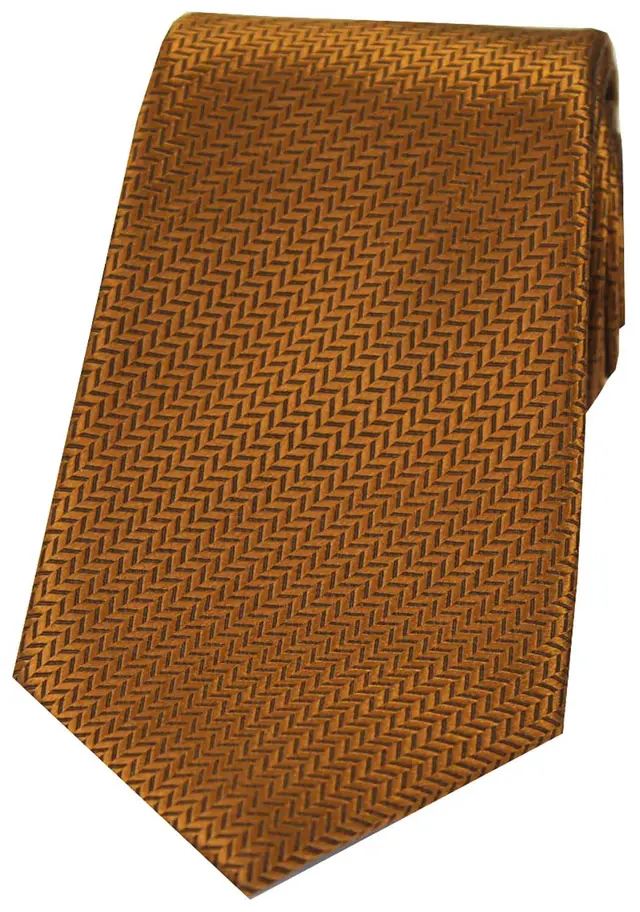
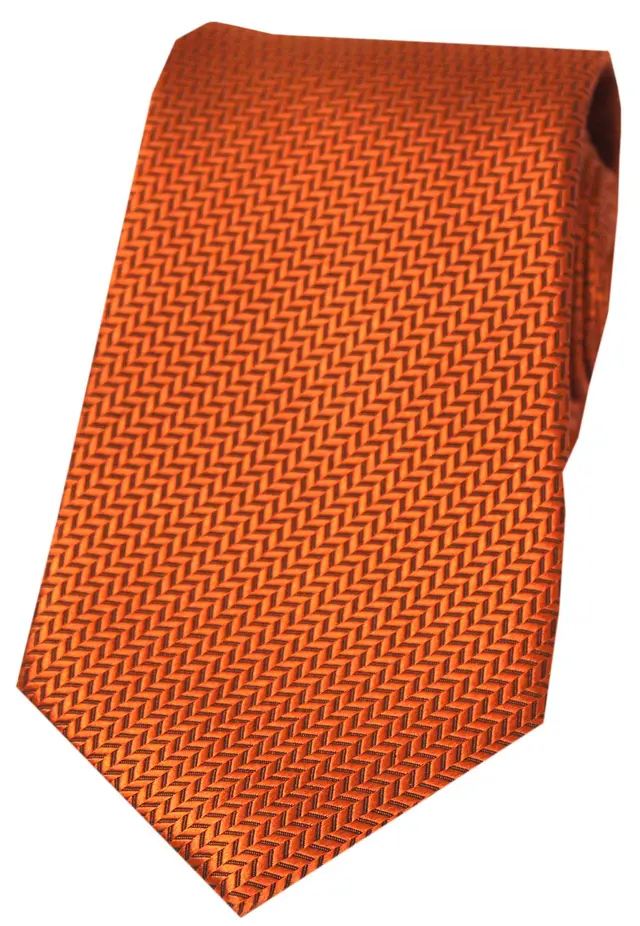
Silk holds a dimple, and a plain one shows the shape of the knot best.
All plain ties —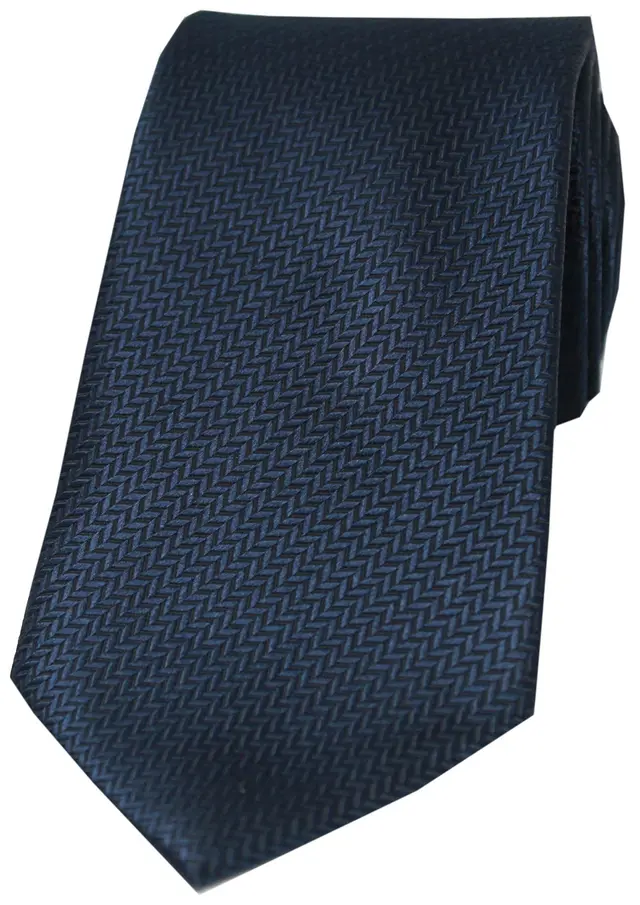
Questions
Anything else? Call us on +44 (0)20 3232 5900
What is the easiest tie knot?
The four-in-hand. It has the fewest movements, suits most collars and most ties, and is the knot most men wear every day.
Where should the tip of a tie sit?
At your waistband — just touching the top of the belt buckle, or the waistband itself if you wear braces.
Which tie knot should I wear to a job interview?
A four-in-hand or a half Windsor, neat and with a dimple. Choose the half Windsor if your collar has a wider spread.
Should the narrow end of a tie show?
No. It should finish a little shorter than the wide end and stay hidden behind it, held by the keeper loop.
Why does my tie keep ending up too short?
The wide end started too high. Untie it and start again with the wide end lower; larger knots need it lower still.
Related
 5 min readHow to tie a half Windsor knotFuller than a four-in-hand and less work than a Windsor. The half Windsor is the knot for a semi-spread collar and a medium silk tie.
 5 min readHow to tie a Windsor knotThe largest of the four knots: broad, square and deliberate. It wants a wide collar, a lighter silk and rather more of the tie than the others.
 5 min readTie width and length guideWidth follows your lapels; length follows you. Get both right and the tie looks made for the suit.