
Stoff & Muster
Silk ties explained
Two ties can share a colour and a width and still be nothing alike. The difference lies in how the silk was made and what is sewn inside it.
Silk has been the cloth of the tie for well over a century, because it takes colour beautifully and ties a firm knot without bulk. It comes in several forms, and each suits different clothes and different days.
Woven or printed
A woven silk tie has its pattern made in the weaving. Coloured threads are worked together on a jacquard loom, so the design is part of the cloth itself; the result has depth, a slight texture and a little more body in the knot.
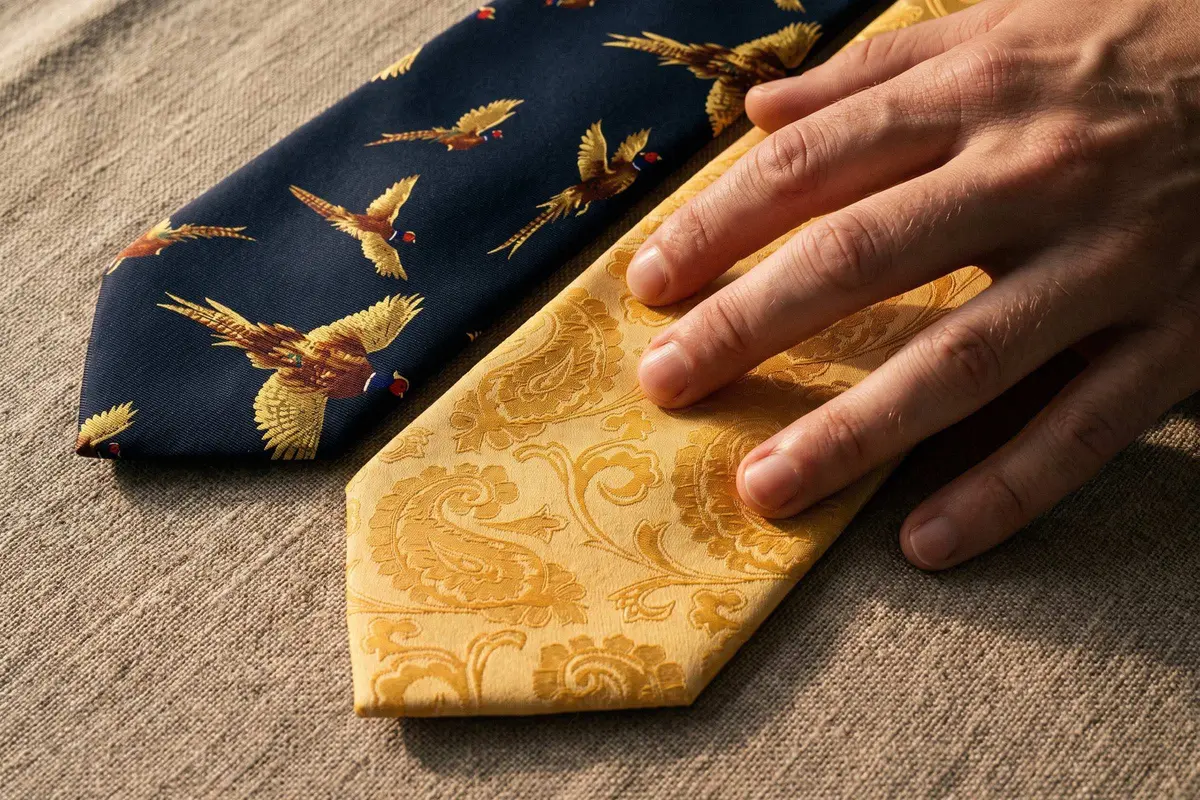
A printed silk tie starts as plain silk, often a twill, with the design printed on top. Printing allows fine detail and many colours, which suits florals, paisleys and pictures, and the tie is lighter, with a softer knot.
Neither is better. Woven ties have more presence and suit business and winter; printed ties are lighter and livelier, and carry pictures best.
Satin, twill and herringbone
Plain silk can be woven several ways, and the weave changes both the look of the tie and its formality.
| Cloth | What it looks like | Tragen Sie ihn für |
|---|---|---|
| Satin | Smooth, with a high shine | Evening, weddings, the black bow tie |
| Twill | Fine diagonal lines and a soft sheen | Every day; prints and cravats |
| Herringbone | A broken zigzag, textured and less shiny | Business, winter, tweed |
| Ribbed (repp) | Pronounced ribs in the cloth | Stripes, club and uniform ties |
Satin is the dressiest, smooth and bright — the cloth of the black satin bow tie. Twill is the everyday weave and the usual cloth of the silk cravat. Herringbone gives a plain tie texture, so a navy herringbone goes with tweed as happily as with worsted.
Knitted silk
Knitted ties are knitted from silk thread rather than woven, with a square end and a width of about 7cm. They have an open, nubbly texture and tie a small, firm knot.

They belong with odd jackets, tweed, flannel and button-down shirts rather than a sharp business suit, and they travel well. Tie them with a four-in-hand, never a Windsor, and roll them for storage rather than hanging them.
If you are starting with one, navy or olive will go with more of your wardrobe than you would expect.
Wool and polyester
Wool-rich ties are matt, soft and warm-looking, the natural partner for tweed, flannel and corduroy. A plain moss green wool-rich tie is as much a part of the country wardrobe as a waxed jacket.
Polyester ties are hard-wearing, easy to clean and hold their colour, which is why they are chosen for corporate ties and uniforms, where many men wear the same tie every day. A ribbed polyester tie will take a working week that would tire silk.
For a wedding, an interview or a present, silk is still the cloth.
What is inside a tie
A tie is more than its outer silk. Most have an interlining — a strip of wool, cotton or a blend sewn inside — which gives the tie its body and decides how heavy it feels and how the knot sits. Too thin and the knot is limp; too thick and it sits like a fist.
The tipping is the fabric facing the back of each end, in the tie’s own silk or a contrasting one; people often call it the lining. It finishes the tips neatly and helps them lie flat.
How to judge a tie
You can tell a good deal about a tie in the first minute you hold it.
- It hangs straight. Hold it up by the narrow end and let it fall. A tie that corkscrews was cut or sewn off true, and will never hang quite right.
- It is cut on the bias. Silk ties are cut diagonally across the cloth, so they bend round the neck and spring back flat afterwards.
- The knot holds. A good tie forms a firm knot that stays where you put it and takes a dimple without fuss.
- The slip stitch gives. Many good ties are sewn down the back with one long, loose stitch, often with a little slack thread at the end, so the tie can flex and recover. Leave that thread alone.
- There is a keeper. A loop on the back of the wide blade holds the narrow end in place, so the tie stays tidy all day.
Most Soprano silk ties are 8cm wide and 148cm long, with slim ties at about 5.5–6.5cm. For what suits your build, see the tie width and length guide.
Fragen
Noch etwas? Rufen Sie uns an unter +44 (0)20 3232 5900
What is the difference between a woven and a printed silk tie?
A woven tie has its pattern made in the weaving, from coloured threads; a printed tie has the design printed on plain silk. Woven ties have more texture and body, printed ties are lighter and carry finer pictures.
Are knitted ties formal?
Not very. They belong with odd jackets, tweed and smart casual clothes rather than a business suit, a wedding or a funeral.
Is a polyester tie acceptable?
For work uniforms and everyday wear, yes: it is hard-wearing and easy to clean. For a wedding, an interview or a present, choose silk.
How can you tell a good silk tie?
Hold it by the narrow end: it should hang straight without twisting. It should tie a firm knot that holds, and lie flat again when you untie it.
Das könnte Sie auch interessieren
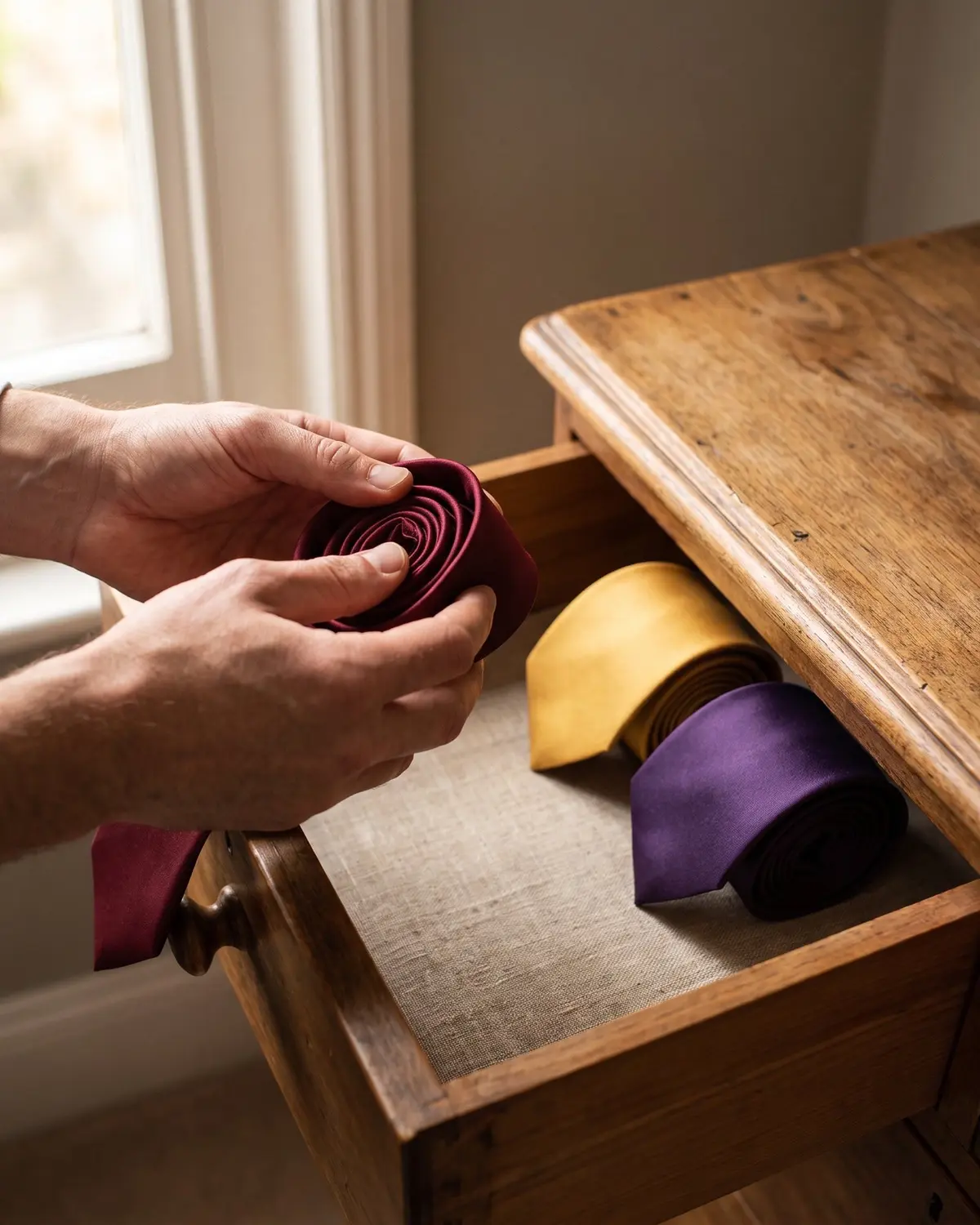 5 Min. LesezeitPflege einer SeidenkrawatteEine gute Seidenkrawatte hält jahrelang, wenn man sie richtig öffnet und ihr eine Pause gönnt. Der meiste Schaden entsteht in den zehn Sekunden nach einem langen Tag.
 5 Min. LesezeitTie patterns explainedEvery tie pattern has a home — the boardroom, the racecourse, the shoot, the wedding. Know where it comes from and you will know where to wear it.
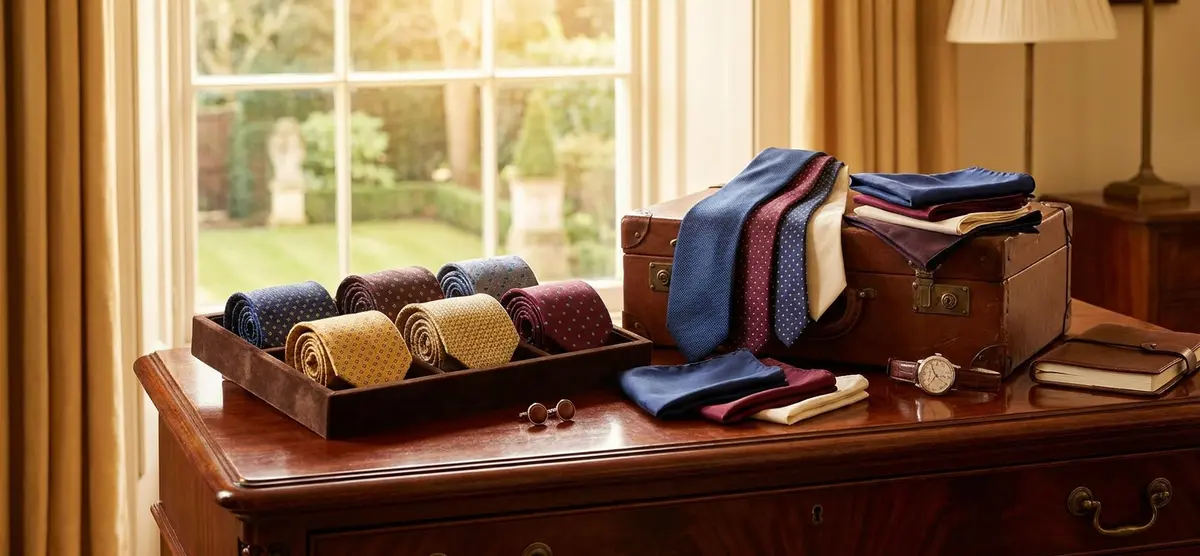 5 Min. LesezeitRatgeber: Breite und Länge der KrawatteDie Breite richtet sich nach Ihren Revers, die Länge nach Ihnen selbst. Stimmen beide, wirkt die Krawatte wie für den Anzug gemacht.